Known-Age Fish: Why They’re Vital for Fisheries Research

The FishAge.org Education Center brings together educational articles, project updates, reference collection insights, and instructional videos from our team and collaborators.

Share this Post:

At FishAge.org, our mission is clear: to provide a publicly available repository of digital imagery from known-age fish structures. This growing archive serves as an invaluable resource for fisheries biologists, offering reference materials that advance fisheries management while also educating and training the next generation of researchers. Let’s take a closer look at why known-age fish are so important and how we’re working to grow this essential resource.

What Are Known-Age Fish?

“Known-age fish” refers to individuals whose exact age has been determined using reliable methods. These fish provide a critical baseline for validating growth models and refining the age estimation of wild populations.

To determine a fish’s age, scientists tag or mark individuals at specific life stages and recapture them later to confirm their age. Techniques like chemical tagging (e.g., oxytetracycline [OTC], Calcein) and physical tagging (e.g., Passive Integrated Transponders [PIT], coded wire tags [CWT], visible implant elastomers [VIE]) allow researchers to track fish origins and verify their ages upon recapture. In some cases, age can also be inferred from characteristics like size or developmental stage. While age estimation is most reliable during the first year of rapid and consistent growth, accuracy tends to decrease as growth slows with age. This is why strong supporting evidence is essential for precise age validation.

How Do Scientists Estimate Fish Age?

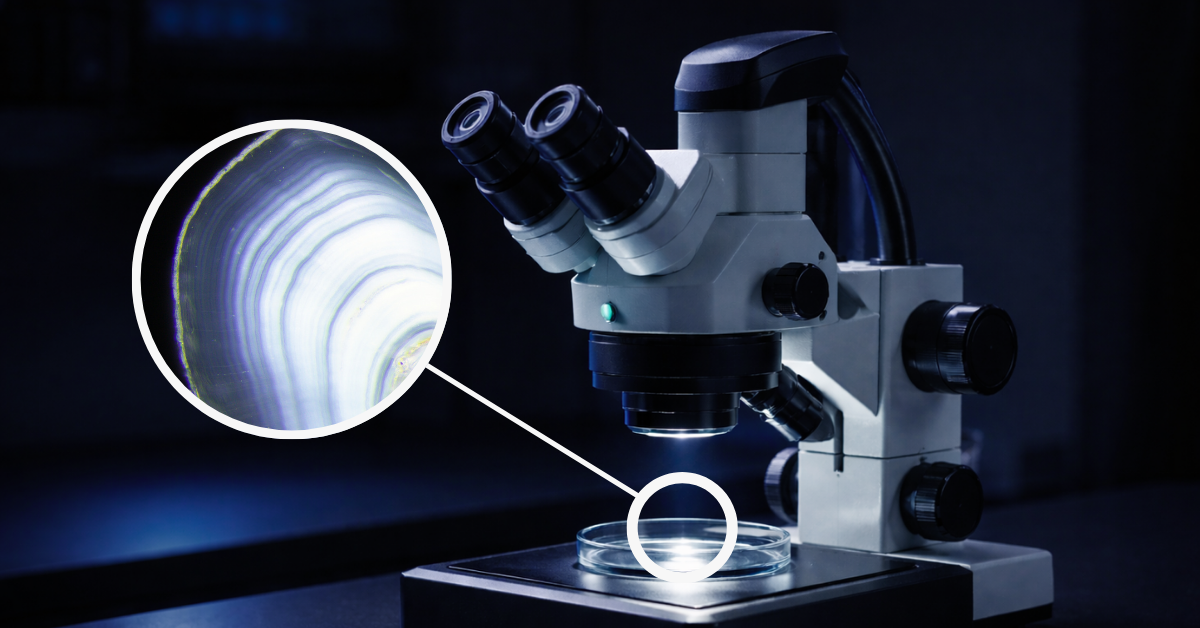
Fish age estimation involves analyzing hard structures like otoliths, scales, and fin rays. These structures grow incrementally throughout a fish’s life, forming distinct annual growth bands called annuli, similar to the rings of a tree. By carefully studying these growth increments, scientists can determine a fish’s age, providing invaluable data for understanding fish population dynamics and ensuring sustainable fisheries management.
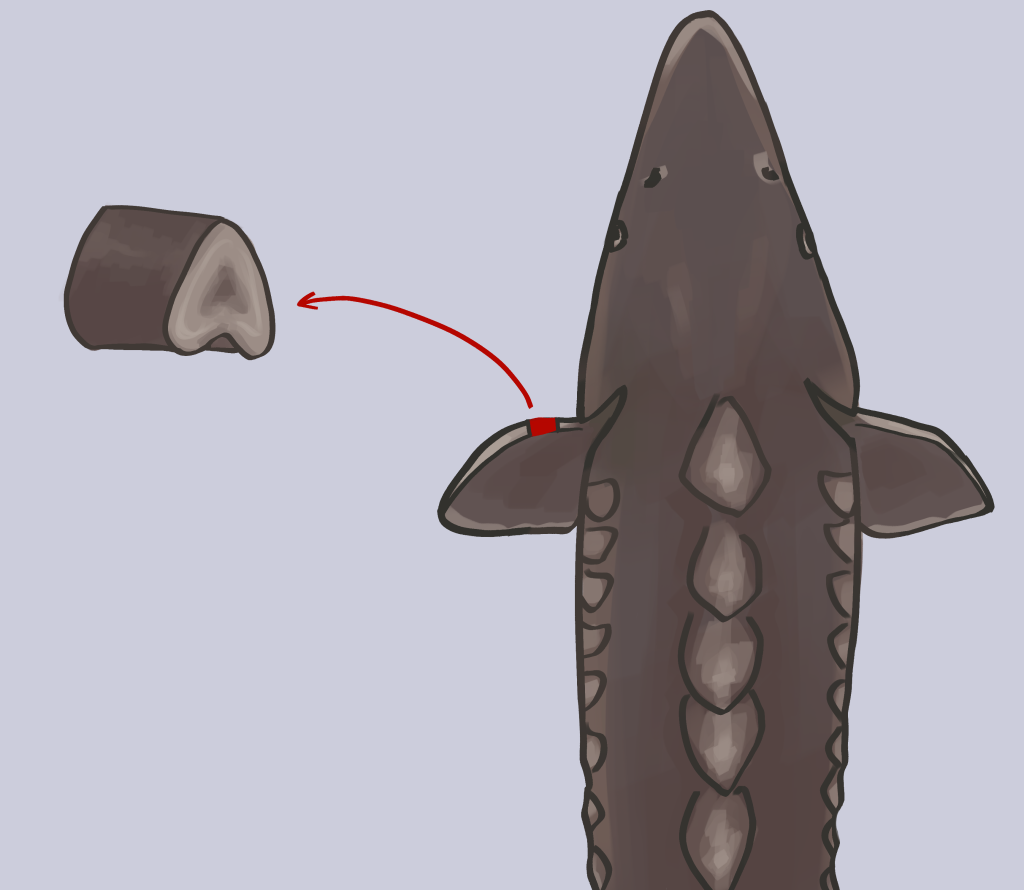

An illustration of a fin spine clipping from a sturgeon species
An illustration of a fin spine clipping from a sturgeon species. Provided by Katie Morgan.
Subscribe to get new Education Center posts by email.

Leave a Comment

Your email address will not be published. Required fields are marked *

Known-Age Fish: Why They’re Vital for Fisheries Research

At FishAge.org, our mission is clear: to provide a publicly available repository of digital imagery from known-age fish structures. This growing archive serves as an invaluable resource for fisheries biologists, offering reference materials that advance fisheries management while also educating and training the next generation of researchers. Let’s take a closer look at why known-age fish are so important and how we’re working to grow this essential resource.

What Are Known-Age Fish?

“Known-age fish” refers to individuals whose exact age has been determined using reliable methods. These fish provide a critical baseline for validating growth models and refining the age estimation of wild populations.

To determine a fish’s age, scientists tag or mark individuals at specific life stages and recapture them later to confirm their age. Techniques like chemical tagging (e.g., oxytetracycline [OTC], Calcein) and physical tagging (e.g., Passive Integrated Transponders [PIT], coded wire tags [CWT], visible implant elastomers [VIE]) allow researchers to track fish origins and verify their ages upon recapture. In some cases, age can also be inferred from characteristics like size or developmental stage. While age estimation is most reliable during the first year of rapid and consistent growth, accuracy tends to decrease as growth slows with age. This is why strong supporting evidence is essential for precise age validation.

How Do Scientists Estimate Fish Age?

Fish age estimation involves analyzing hard structures like otoliths, scales, and fin rays. These structures grow incrementally throughout a fish’s life, forming distinct annual growth bands called annuli, similar to the rings of a tree. By carefully studying these growth increments, scientists can determine a fish’s age, providing invaluable data for understanding fish population dynamics and ensuring sustainable fisheries management.
An illustration of a fin spine clipping from a sturgeon species
An illustration of a fin spine clipping from a sturgeon species. Provided by Katie Morgan.

The FishAge.org Education Center brings together educational articles, project updates, reference collection insights, and instructional videos from our team and collaborators.

Share this Post:
Subscribe to get new Education Center posts by email.

Leave a Comment

Your email address will not be published. Required fields are marked *