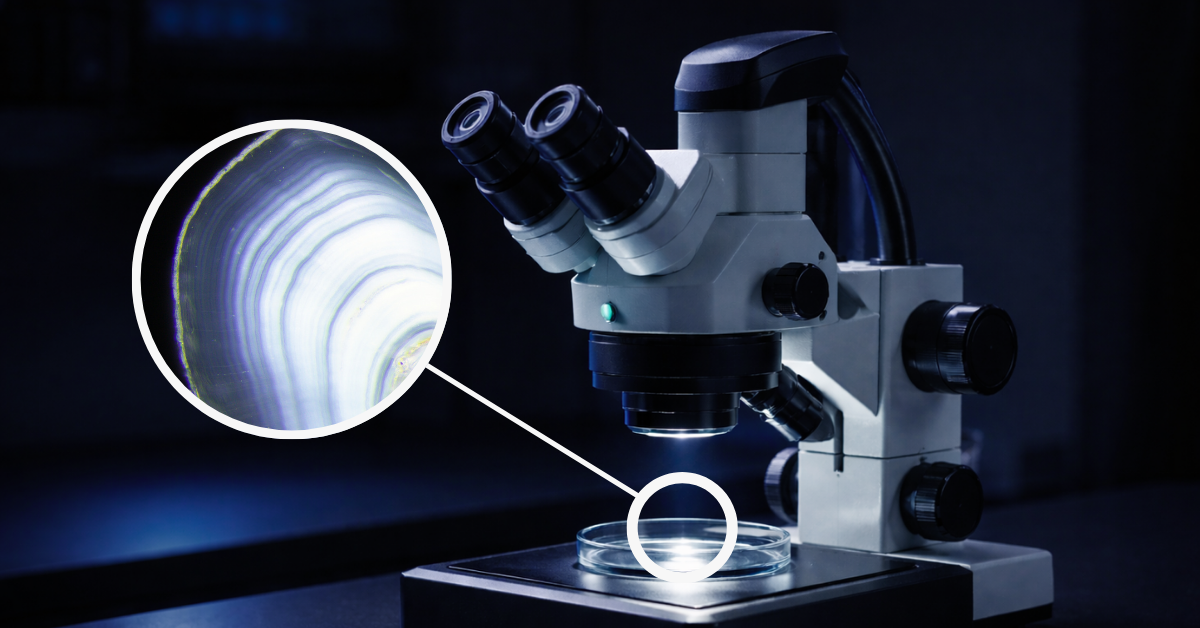
If you’ve ever aged a fish, chances are you’ve worked with an otolith. These small, calcified structures, often called “ear stones,” are located in a fish’s inner ear and play a key role in balance and hearing. For fisheries scientists, they’re one of the most reliable tools for determining a fish’s age, thanks to the visible growth rings that build up over time.
But there’s more to otoliths than meets the eye, and more than one kind too.
Not Just One: Three Pairs of Otoliths

Fish actually have three pairs of otoliths: sagittae, lapilli, and asterisci. Each type sits in a different part of the inner ear and serves a slightly different function.
- Sagittae are the largest and most commonly used in ageing. You’ll usually find them just behind the eyes, and they’re often the easiest to remove, polish, and read.
- Lapilli are the smallest and sit toward the top of the skull. They help the fish detect gravity and motion.
- Asterisci are located near the brainstem and are sometimes used for ageing if sagittae aren’t available or are damaged.
Depending on the species, the size and shape of each otolith type can vary quite a bit, which is part of what makes them so interesting to study.
A Wide Range of Shapes and Sizes
Otoliths aren’t one-size-fits-all. They come in a surprising variety of forms: some are long and curved and others are short and rounded. Their size, shape, and structure depend on the species, the fish’s age, and even environmental factors.
This variation is exactly why we created the Known-Age Fish Image Database. By sharing images of otoliths from fish with verified ages, we’re building a reference that can help scientists, students, and technicians compare, identify, and learn across species and regions.
What Else Can Otoliths Tell Us?
While otoliths are best known for their use in ageing, they also hold valuable clues about where a fish has been. As otoliths grow, they incorporate elements from the water the fish is living in, like strontium, barium, and calcium. By analyzing the chemical makeup of different growth increments (a technique called otolith microchemistry), scientists can trace a fish’s movements, determine its birthplace, or even tell whether it was wild or hatchery-raised.
Because otoliths are metabolically inert, meaning they don’t change once formed, they serve as permanent records of a fish’s environmental history. That makes them powerful tools not just for ageing.