Fresh Catch: Chinook Salmon Dorsal Fin Rays

The FishAge.org Education Center brings together educational articles, project updates, reference collection insights, and instructional videos from our team and collaborators.

Share this Post:

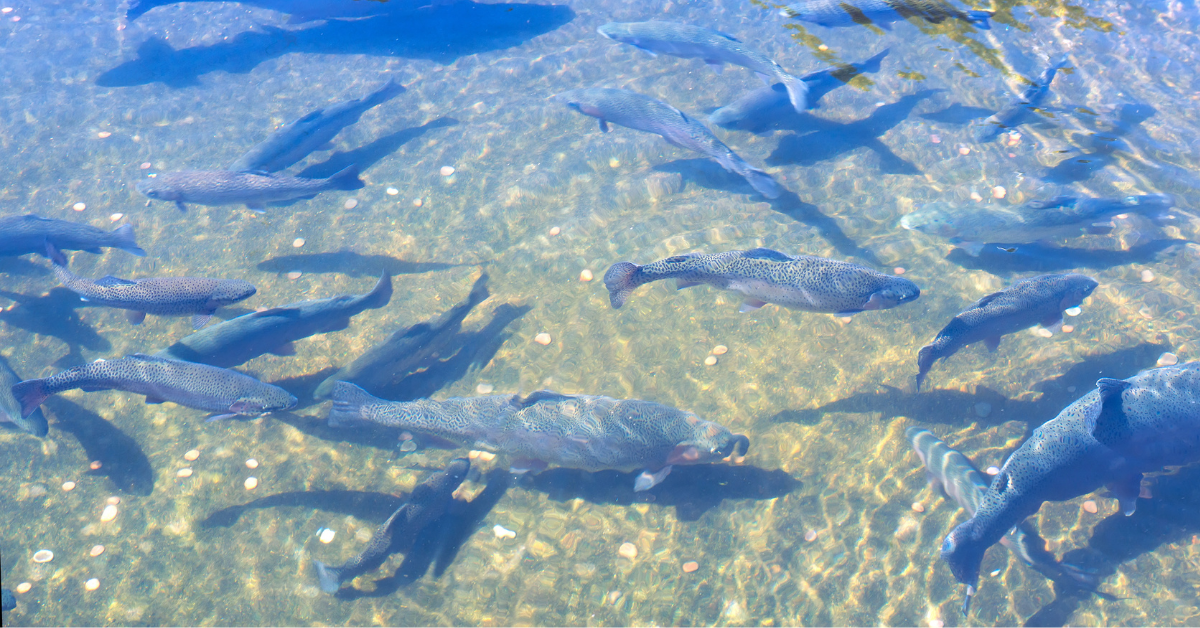
We’re excited to announce a new species addition to the FishAge website: Chinook Salmon (Oncorhynchus tshawytscha) from Idaho. This update expands our coverage of an ecologically, culturally, and economically important species and adds valuable reference material for age estimation.

About the samples

For this collection, we include known-age Chinook Salmon (ages 3–5). Ages were validated using dorsal fin rays collected from CWT recovered salmon carcasses, providing a reliable reference for age determination and comparison. These known-age structures are especially valuable for training, calibration, and quality control in ageing work.

The samples included in this collection originate from a few different fish hatcheries managed by the Idaho Department of Fish and Game. These hatchery programs play a critical role in conserving and supplementing Chinook Salmon populations. Below is a brief overview of the facilities represented in this FishAge addition.

Sawtooth Fish Hatchery
Sawtooth Fish Hatchery is responsible for trapping, spawning, and rearing spring Chinook Salmon to the smolt stage prior to release. The hatchery supports recovery and supplementation efforts in central Idaho river systems.

Rapid River Fish Hatchery
At Rapid River, adult spring Chinook Salmon arrive at the trap from May through September. Fish are removed daily and transferred to holding ponds at the hatchery to await spawning.

Spring Chinook trapped in excess of broodstock needs are either released back into fisheries or provided to humanitarian agencies for consumption. In addition, spring Chinook Salmon are trapped in the Snake River at Idaho Power’s Hells Canyon Trap and transported to Rapid River Fish Hatchery for use as broodstock.

Clearwater Fish Hatchery
The Clearwater Fish Hatchery is a large, multi-purpose facility consisting of two separate incubation facilities, 35 outdoor raceways for Chinook and steelhead rearing, four adult holding ponds, a spawning area, and supporting infrastructure. The hatchery includes residences for permanent staff as well as an administration building and dormitory, enabling year-round operations.

Nampa Fish Hatchery raceway. Source: IDFG

What are weirs?

Weirs are fence-like structures placed across streams or rivers to guide migrating fish into a controlled area where they can be counted, sampled, tagged, or collected. Typically made of metal or wooden pickets, weirs channel fish toward a small opening leading into a trap box.

  • As salmon encounter a weir, they naturally swim along the barrier until reaching the opening.

  • One-way panels in the trap make it difficult for fish to exit, allowing temporary collection for data or sampling.

  • Depending on management goals, fish may be released upstream, retained for broodstock, or collected for biological research.

Weirs are invaluable for monitoring returning adult salmon, recovering tagged fish (e.g., CWT fish), and obtaining high-quality biological data. Because fish intercepted at weirs often have a known origin and history, they are especially useful for age validation and research.

Read more about weirs here and here.

Pickett weir constructed across Fish Creek. Source: IDFG

Why this matters

Including Chinook Salmon with known ages strengthens FishAge as a resource for fisheries professionals, students, and researchers. These samples support more accurate age estimation, method comparison, and training across labs and agencies working with salmonids.

We’re grateful to the Idaho hatchery programs and collaborators who made this addition possible and helped expand the diversity and utility of the FishAge reference library.

further reading

The structures were processed for imaging using the fin ray ageing methods developed by the Idaho Department of Fish and Game. For a more information on these techniques, see the publication Methods for Processing Chinook Salmon Dorsal Fin Rays for Age Estimation by Myers et al. 2025.

This publication outlines standardized procedures for collecting, preparing, and sectioning dorsal fin rays, as well as guidance for interpreting annuli to estimate age in Chinook Salmon. These protocols support consistent and accurate age determination and form the foundation for the known-age fin ray samples (ages 3–5) included in this new reference collection.
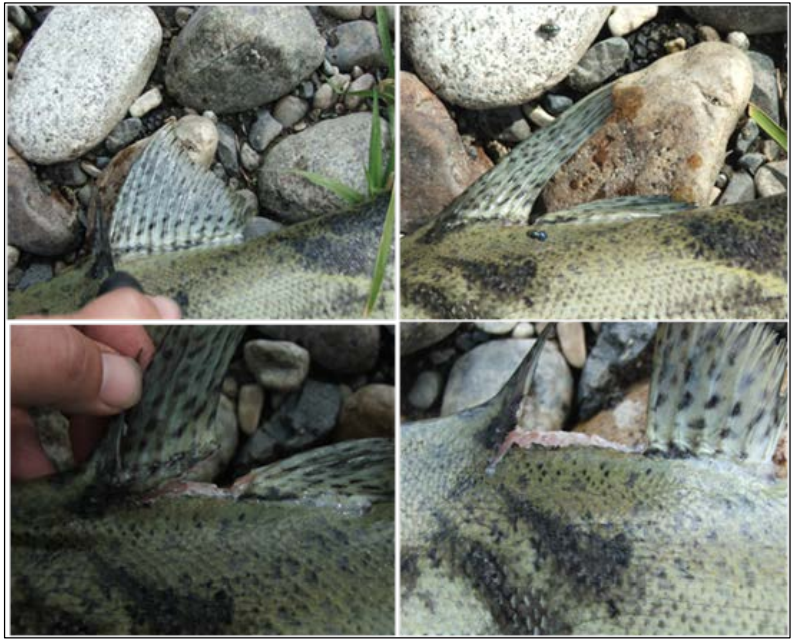
Dorsal fin ray removal from a fresh Chinook Salmon carcass. Source: Copeland et al. 2019. IDFG Report Number 19-16.


As always, we’ll continue adding new species and structures to FishAge. Stay tuned for more updates!

Subscribe to get new Education Center posts by email.

Leave a Reply

Your email address will not be published. Required fields are marked *

Fresh Catch: Chinook Salmon Dorsal Fin Rays

We’re excited to announce a new species addition to the FishAge website: Chinook Salmon (Oncorhynchus tshawytscha) from Idaho. This update expands our coverage of an ecologically, culturally, and economically important species and adds valuable reference material for age estimation.

About the samples

For this collection, we include known-age Chinook Salmon (ages 3–5). Ages were validated using dorsal fin rays collected from CWT recovered salmon carcasses, providing a reliable reference for age determination and comparison. These known-age structures are especially valuable for training, calibration, and quality control in ageing work.

The samples included in this collection originate from a few different fish hatcheries managed by the Idaho Department of Fish and Game. These hatchery programs play a critical role in conserving and supplementing Chinook Salmon populations. Below is a brief overview of the facilities represented in this FishAge addition.

Sawtooth Fish Hatchery
Sawtooth Fish Hatchery is responsible for trapping, spawning, and rearing spring Chinook Salmon to the smolt stage prior to release. The hatchery supports recovery and supplementation efforts in central Idaho river systems.

Rapid River Fish Hatchery
At Rapid River, adult spring Chinook Salmon arrive at the trap from May through September. Fish are removed daily and transferred to holding ponds at the hatchery to await spawning.

Spring Chinook trapped in excess of broodstock needs are either released back into fisheries or provided to humanitarian agencies for consumption. In addition, spring Chinook Salmon are trapped in the Snake River at Idaho Power’s Hells Canyon Trap and transported to Rapid River Fish Hatchery for use as broodstock.

Clearwater Fish Hatchery
The Clearwater Fish Hatchery is a large, multi-purpose facility consisting of two separate incubation facilities, 35 outdoor raceways for Chinook and steelhead rearing, four adult holding ponds, a spawning area, and supporting infrastructure. The hatchery includes residences for permanent staff as well as an administration building and dormitory, enabling year-round operations.

Nampa Fish Hatchery raceway. Source: IDFG

What are weirs?

Weirs are fence-like structures placed across streams or rivers to guide migrating fish into a controlled area where they can be counted, sampled, tagged, or collected. Typically made of metal or wooden pickets, weirs channel fish toward a small opening leading into a trap box.

  • As salmon encounter a weir, they naturally swim along the barrier until reaching the opening.

  • One-way panels in the trap make it difficult for fish to exit, allowing temporary collection for data or sampling.

  • Depending on management goals, fish may be released upstream, retained for broodstock, or collected for biological research.

Weirs are invaluable for monitoring returning adult salmon, recovering tagged fish (e.g., CWT fish), and obtaining high-quality biological data. Because fish intercepted at weirs often have a known origin and history, they are especially useful for age validation and research.

Read more about weirs here and here.

Pickett weir constructed across Fish Creek. Source: IDFG

Why this matters

Including Chinook Salmon with known ages strengthens FishAge as a resource for fisheries professionals, students, and researchers. These samples support more accurate age estimation, method comparison, and training across labs and agencies working with salmonids.

We’re grateful to the Idaho hatchery programs and collaborators who made this addition possible and helped expand the diversity and utility of the FishAge reference library.

further reading

The structures were processed for imaging using the fin ray ageing methods developed by the Idaho Department of Fish and Game. For a more information on these techniques, see the publication Methods for Processing Chinook Salmon Dorsal Fin Rays for Age Estimation by Myers et al. 2025.

This publication outlines standardized procedures for collecting, preparing, and sectioning dorsal fin rays, as well as guidance for interpreting annuli to estimate age in Chinook Salmon. These protocols support consistent and accurate age determination and form the foundation for the known-age fin ray samples (ages 3–5) included in this new reference collection.

Dorsal fin ray removal from a fresh Chinook Salmon carcass. Source: Copeland et al. 2019. IDFG Report Number 19-16.


As always, we’ll continue adding new species and structures to FishAge. Stay tuned for more updates!

The FishAge.org Education Center brings together educational articles, project updates, reference collection insights, and instructional videos from our team and collaborators.

Share this Post:
Subscribe to get new Education Center posts by email.

Leave a Reply

Your email address will not be published. Required fields are marked *